Car Rental in Costa Rica: Mandatory Insurance, Cards and 4x4
Why a Costa Rica rental quote jumps at the counter, the mandatory liability policy, what a credit card covers, when you need a 4x4, tolls, gas and fines.
The daily rate you see online isn’t what you pay for a rental car in Costa Rica. The gap is a liability policy that every rental must carry, that a credit card doesn’t replace, and that many online quotes leave out. Get that one line straight and everything after it is ordinary driving, with a few local quirks.
The quote and the counter are two different prices
Costa Rica’s rental companies, Vamos and Adobe among them, say the law requires every rental car to carry third-party liability insurance. Rental companies sell it under the names TPL, SLI or PLI, and it is charged per day on top of the daily rate. Vamos Rent-A-Car, which prints its numbers openly, charges $15.95 a day for sedans through full-size cars and $17.95 a day for premium cars (as of its insurance page, checked November 16, 2026). Its liability cover pays for injuries to other people and damage to their property, up to roughly $271,000 for property, with a 20 percent deductible. It does not pay for your injuries or for the car you’re driving.
Those numbers explain the classic Costa Rica surprise. A comparison site shows a car at $9 a day, and at the desk the contract adds the liability policy, $15.95 a day for a sedan at Vamos, plus, often, a collision waiver. Vamos says as much about the market: its own pages describe comparison quotes that leave the mandatory policy out and warn that the charge will appear on the final bill anyway. So compare totals, not daily rates: the figure that matters is the daily rate plus liability plus whichever collision cover you choose, times the number of days, plus taxes and any pickup fee.
The same company gives a useful anchor for the collision side. Its basic collision waiver (CDW) with the liability policy together runs $24.95 a day for the same sedan group, with a $750 deductible. Those are one operator’s prices, not a national tariff. Other companies charge differently, and the mix of what is included changes the total more than the headline rate does.
What your credit card covers, and what it can’t
Many US and Canadian travel cards cover collision damage to a rental car. In Costa Rica that’s useful, but it’s only half the cover. A card can stand in for the collision waiver. It can’t stand in for the third-party liability policy, because Vamos says Costa Rica requires every rental vehicle to carry that one. Neither policy pays your own hospital bill after a crash: that’s the job of travel medical insurance.
To use your card for the collision side, you need to prove it. Vamos asks for a printed letter or email from the card issuer showing your full name and the last four digits of the card, and without it the car can’t be rented unless you take the in-house waiver. Adobe Rent a Car says some card programs don’t apply in Costa Rica and that you may need an official letter confirming coverage there. Call your issuer before you fly and ask for a letter that names Costa Rica and the vehicle class you plan to rent. Vamos warns that card programs can limit the car category and the length of rental, which matters if you book a 4x4.
The trade-off shows up in the deposit. When you decline the company’s collision waiver, the hold on your card goes up. Vamos lists a $2,000 hold with the liability policy only, $750 with the basic waiver and $100 with the full one. Adobe lists a $1,000 hold. The hold is returned after the car comes back, but it takes a few days to clear, so it needs room on the card’s limit for the whole trip. A card with a low limit is a better reason to buy the full waiver than any sales pitch.
When a 4x4 earns its price
Less often than rental websites suggest, but sometimes.
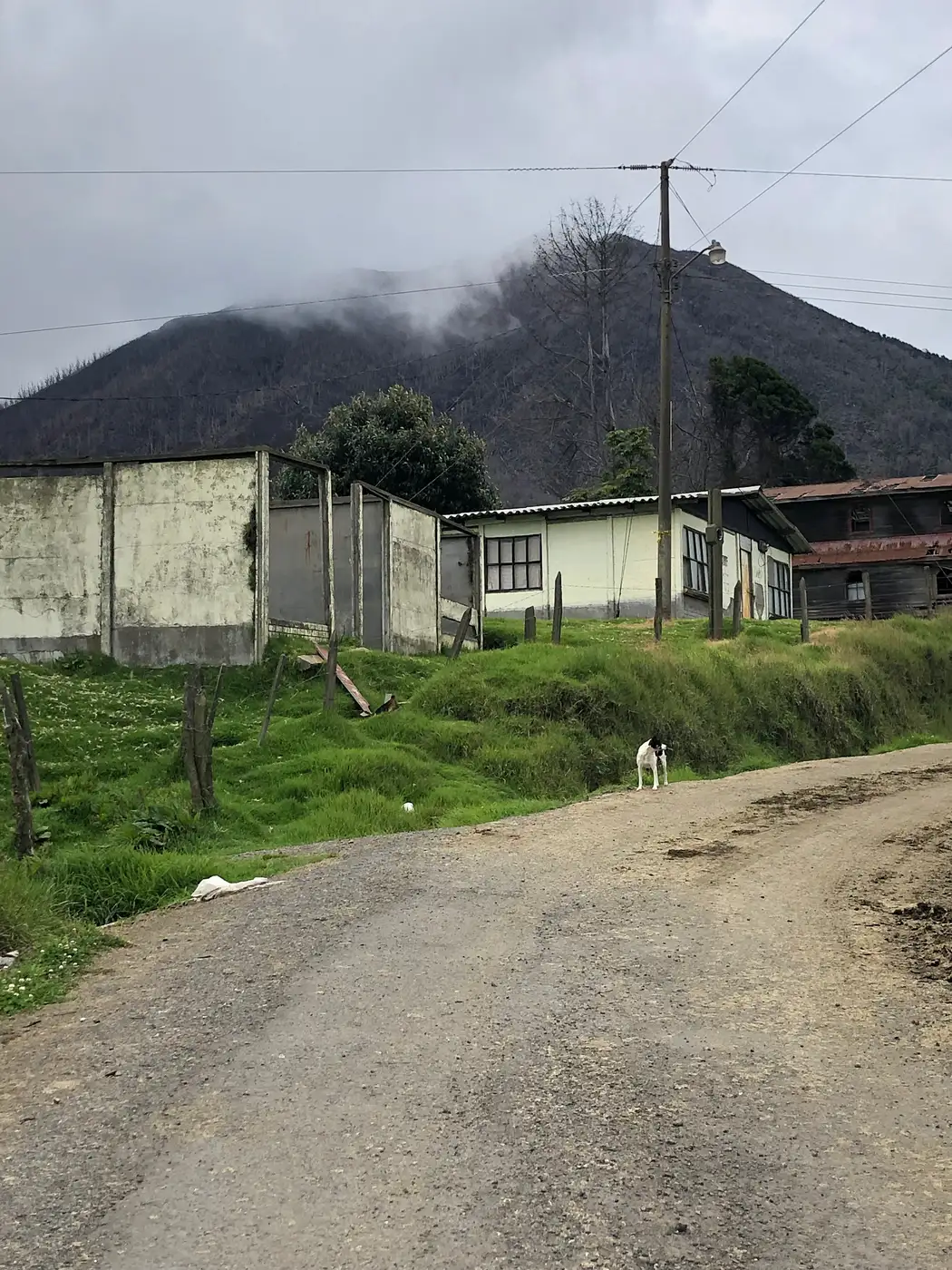
A regular car handles the main paved roads between San José, the Pacific beaches and the Arenal area. The trouble starts on the last stretch to the places people pick Costa Rica for: cloud forest lodges, remote beaches and the Osa Peninsula. Vamos’s own pages differ in strength: its vehicle-requirements blog says a 4x4 is required for Monteverde, Santa Teresa, Montezuma and mountain eco-lodges year-round, while its driving guide, updated November 10, 2026, calls a 4x4 or high-clearance SUV the better choice for Monteverde, especially from May to November, and its dry-season route table still suggests a 4x4 from La Fortuna to Monteverde. Other guides say that the main road to Santa Elena has been paved in stages. The state of the last unpaved stretch changes, so ask your lodge in writing before you book the car, and again the week you drive. Our Monteverde guide covers the town itself, and the Arenal and northern lowlands page covers the roads in that area.
A rule that works: book a higher-clearance SUV or a 4x4 if your lodge sits at the end of a gravel road, if you’re driving in the green season (May to mid-December) in the mountains, or if the itinerary includes the Osa Peninsula. On the Arenal side and the Caribbean, rain can fall in any season: the IMN, the national weather service, gives neither region a dry-season start date.
The part that catches people is the river. A 4x4 can drive through a stream, and the rental contract still says you can’t. Vamos’s contract lists driving “in, through or over rivers, estuaries and/or beaches”, and using the transmission in 4x4 mode above 40 km/h, as negligence, and in those cases the waiver no longer covers the car. So treat a river across the road as the end of that road: wait, turn around or take another route. Under that clause even the full waiver gives you nothing back.
Your license, your passport and your age
A foreign license is valid for driving in Costa Rica for as long as your authorized legal stay in the country. Law 10591, published in La Gaceta on December 2, 2024, changed the old three-month limit to a period identical to the legal stay, which is up to 180 days for many nationalities. In practice your date of entry starts the clock on your license, so carry the passport itself when you drive: Canada’s travel advice says photocopies aren’t acceptable. Vamos says an International Driving Permit isn’t required unless your license isn’t in the Latin alphabet. The rental desk asks for your passport and license and the credit card in the same name as the passport. How long immigration lets you stay, by passport, is in our before-you-go guide.
Age rules belong to each company, not to the law. Vamos rents from age 18, but doubles the basic waiver deductible for drivers aged 18 to 20 and doesn’t sell the full waiver to them. Other companies set their own minimums, so check before you book, and list every driver on the contract: Vamos states that an unlisted driver voids the insurance.
Tolls, gas and the exchange rate
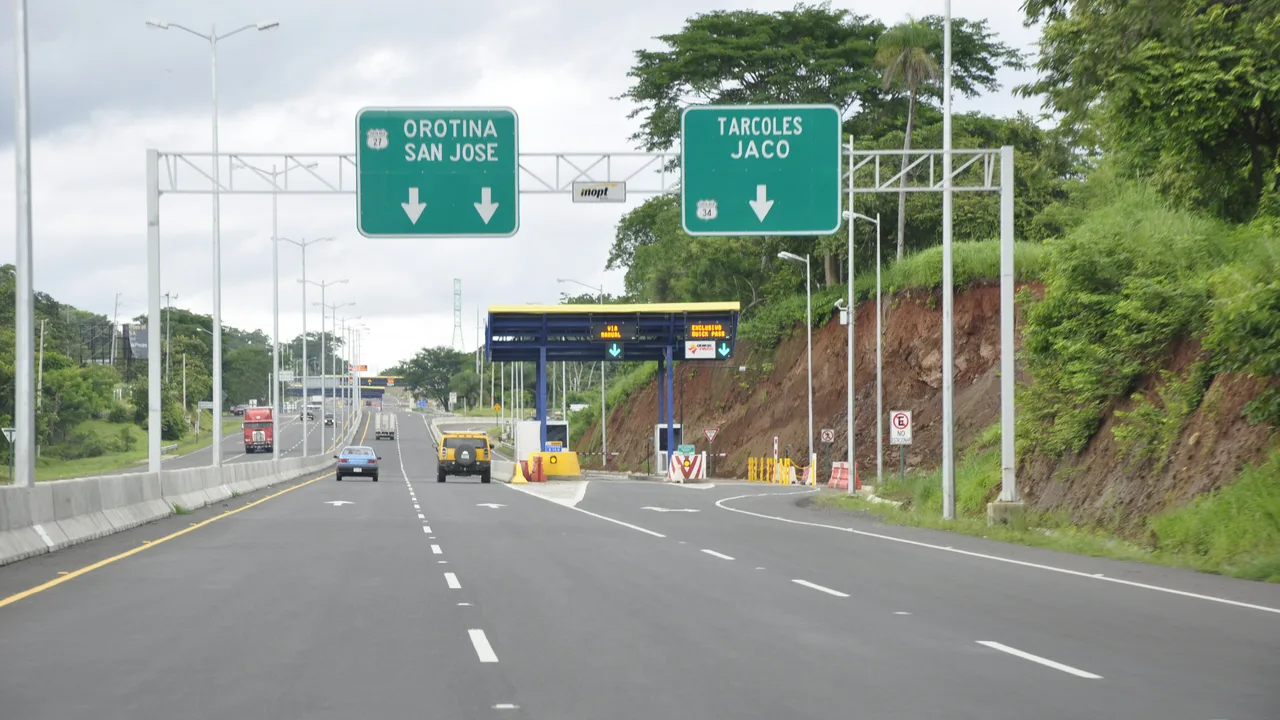
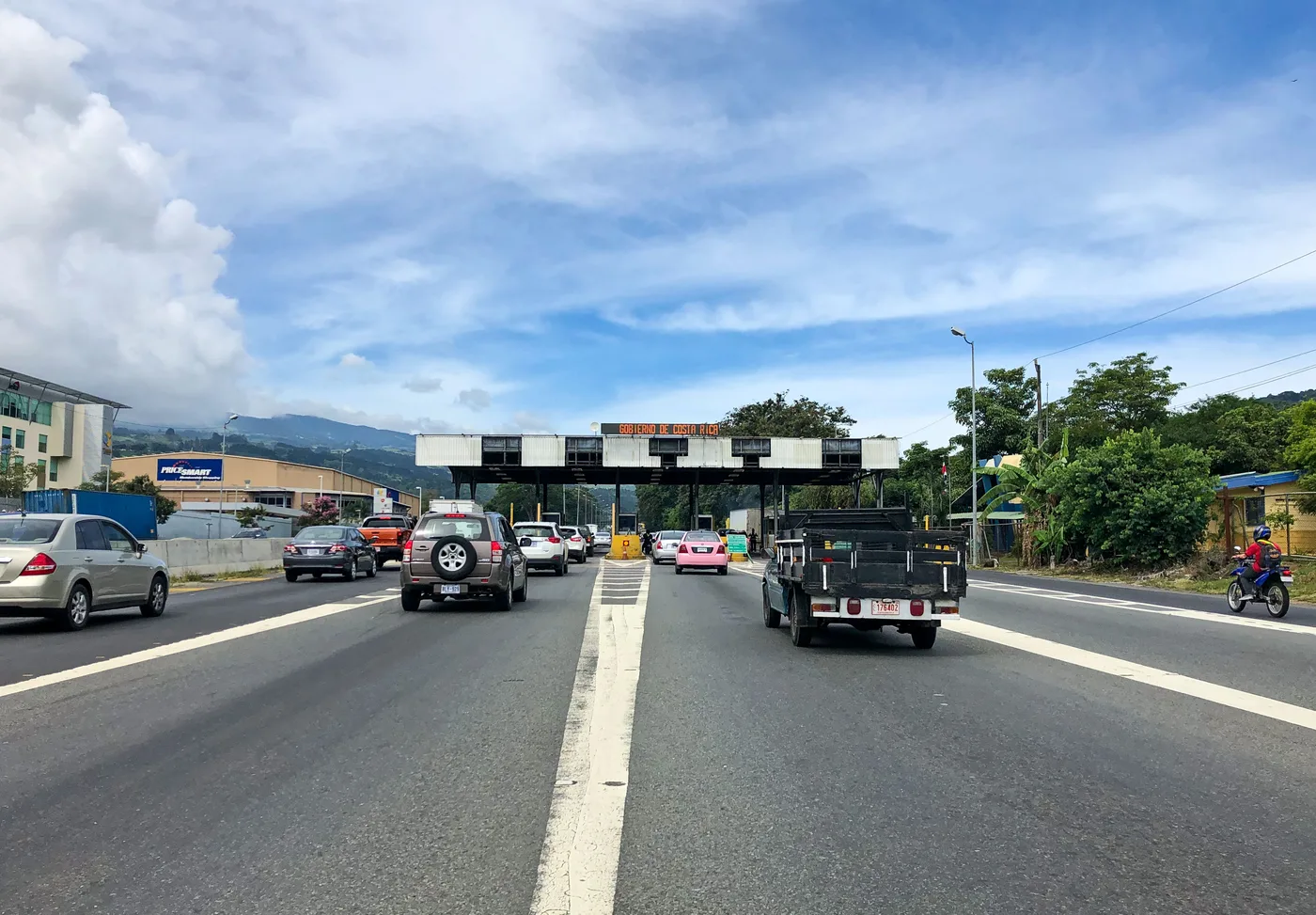
The toll road you’re most likely to use is Route 27, from San José to the Pacific coast at Caldera: you’ll take it on the way to Manuel Antonio and again on the way back to the airport. Tolls on the route are paid in colones and revised every quarter by the concession, Ruta 27. In the table in force since October 2026, a car pays ₡380 at Escazú and ₡750 at Atenas (about $0.84 and $1.65 at ₡454 to the dollar). Several plazas on one trip add up to a few dollars, so ask your rental desk how tolls are paid before you leave the lot.
Gas is priced by the state. The regulator, ARESEP, revises pump prices monthly. The prices in force from November 10, 2026 are ₡805 per liter for super, ₡807 for regular and ₡807 for diesel. At about ₡454 to the dollar (the November 13, 2026 cross rate), that’s roughly $1.77 to $1.78 a liter, or about $6.72 a gallon. In November 2026 regular cost ₡2 more than super, a quirk of that month’s adjustment. Check the current table before you budget.
Speed, fines and what gets stolen
Fines are set in colones by law. For 2026, driving more than 40 km/h over the posted limit costs ₡245,195 (about $540), and using a phone without hands-free costs ₡122,598 (about $270). The courts’ schedule took effect on January 1, 2026. Law 10943, published in June 2026, also made driving above 120 km/h on any public road a specific offense. Limits drop sharply near towns and schools, so follow the signs, not what the car in front of you is doing.
Theft from cars is the other thing to plan for. Canada’s travel advice says car break-ins and theft are very common in the country and that rental vehicles are a target of choice, typically in parking lots of hotels, supermarkets, restaurants, national parks and beaches. The US State Department’s advisory (Level 2, issued April 2, 2026) adds that a locked car can still be targeted and that thieves can use jammers against key fobs. Three habits follow from this: check by hand that the doors are locked, leave nothing visible (ideally nothing at all) in the car, and use the attended lots at beaches and park entrances.
Picking up at SJO or LIR
Two airports serve visitors: Juan Santamaría (SJO) near San José and Daniel Oduber Quirós (LIR) at Liberia. Many rental offices aren’t in the terminal at all. Vamos, for one, meets you outside the arrivals exit at Liberia and takes you by free shuttle to its office 2 km away, about seven minutes, and says that staying off the airport grounds keeps a 12 percent airport tax off the bill. Check the same point with any company you book: whether the desk is in the terminal, whether the airport fee is included in the total and how late the office stays open if your flight lands at night.

Pick the airport by the trip. Fly into SJO if you’re doing the Arenal, Monteverde and Manuel Antonio loop that we lay out in Costa Rica in 7 days, and into LIR if the trip is the northern Pacific beaches. If you start at one airport and end at the other, ask for the one-way fee before booking.
Before you book: a short list
- Get the all-in total with liability insurance, not the daily rate.
- Ask your card issuer for the Costa Rica coverage letter, or budget for the company’s waiver.
- Pick the vehicle for the last stretch of road to your lodge.
- Carry your passport, not a copy, whenever you drive.
- Photograph the car on all sides at pickup, including the windshield and tires.
- Leave nothing in the car, and don’t drive through rivers in any season: the contract treats it as negligence.
Read also

Regions · 9 min read
Arenal and the Northern Lowlands: Where to Base Yourself
Updated · November 17, 2026La Fortuna, El Castillo or the lake road? Where to base yourself around Arenal, what the volcano park and waterfall cost, and how to drive from SJO or LIR.

Before you go · 9 min read
Before You Go to Costa Rica: Entry, Money and Seasons
Updated · November 17, 2026Visa-free entry for US, Canadian, UK and Australian passports, stay of 90 or 180 days, $100-a-month funds rule, $29 departure tax, money and seasons.

Food · 7 min read
Costa Rican Food: What to Order, Where, and the Check
Updated · November 17, 2026One La Fortuna soda charges ₡7,500 for a casado, service included. What to order, where to eat it, and what to do if the check runs above the menu.

Transport · 12 min read
Getting Around Costa Rica: Bus, Shuttle, Flight, Ferry
Updated · November 17, 2026Bus fares in colones, shuttle and flight times, the Paquera ferry and taxi rates for Costa Rica, from ARESEP and the operators, November 2026.